Thinking about buying a farmstead in Brown County, Kansas? It is easy to focus on the house, the views, and the extra space, but rural property comes with questions that do not show up in most in-town home searches. If you want to avoid expensive surprises, you need to look at the records, the land systems, and the county rules before you fall in love with the place. Let’s dive in.
Start With County Records First
Before you judge a farmstead by the photos, confirm what you are actually buying. Brown County offers a public Parcel Search through the county appraiser and a free GIS mapping system that does not require a login. Those tools can help you verify parcel identity, lot lines, assessed records, and whether the property appears to function as one tract or several use areas.
This matters because a farmstead may include a house site, barns, pasture, storage areas, and other improvements that do not all fit neatly into one simple category. Brown County also lists current zoning resolutions and applicable construction codes. That means you should not assume every building, addition, or improvement is automatically outside local review.
What To Check In Parcel Search And GIS
When you review county records, focus on a few basics first:
- Parcel boundaries and shape
- Whether the home site and agricultural ground appear to be separated in records
- Locations of barns, sheds, or other outbuildings
- Road frontage and access points
- Any visible land-use differences across the tract
A quick records check can tell you whether the property on paper matches what you think you are touring in person. That step can save you time and help you ask better questions early.
Treat The Farmstead As Separate Systems
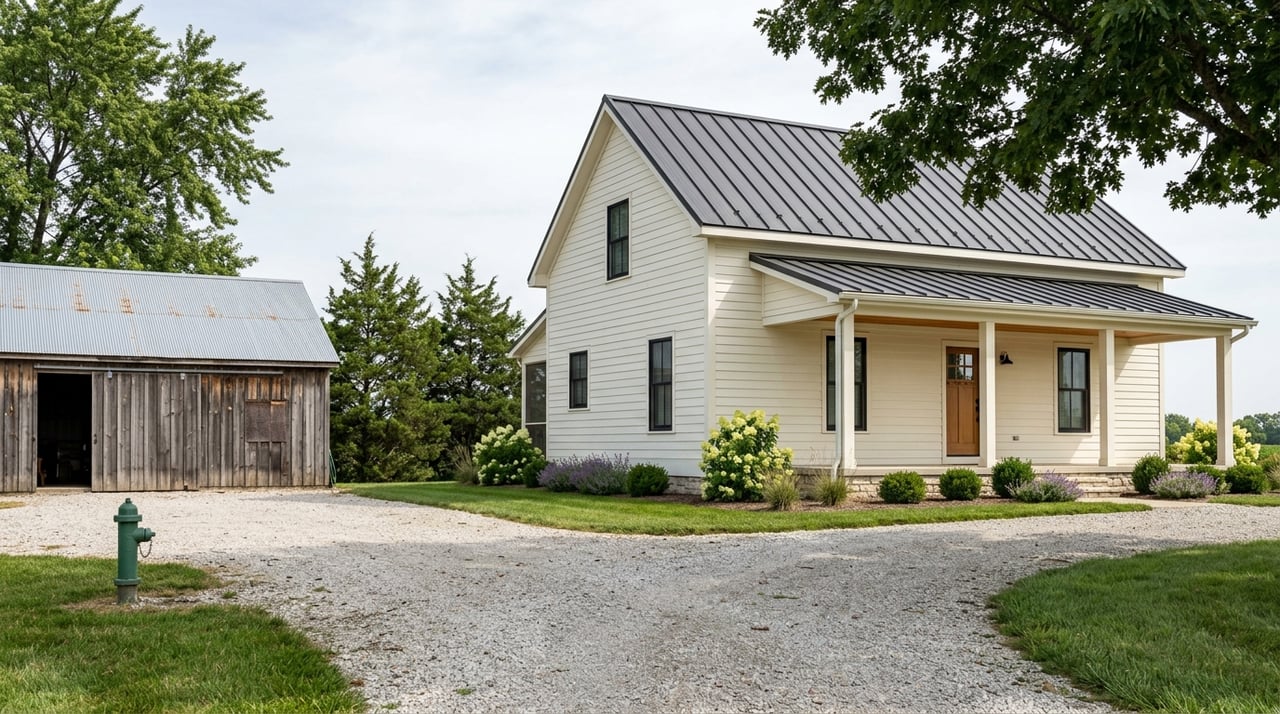
A Brown County farmstead is more than a house with some extra land. K-State notes that farmsteads often include outbuildings, lawns, fences, grain storage, and livestock confinement areas, all of which can create maintenance needs and may affect groundwater risk near the home site. In practical terms, you should evaluate the property as a bundle of systems rather than a single improvement.
The house may be in good shape while the barn needs structural work. The shop may be useful, but the fencing may need replacement. A detached garage, loafing shed, grain bin area, or storage building may each carry its own upkeep, safety, and use questions.
Inspect Every Structure Separately
As you walk the property, think about each structure as its own asset:
- House
- Detached garage
- Barn
- Shop
- Sheds
- Storage areas
- Fences and gates
Ask what stays with the sale, what has deferred maintenance, and how each area is currently used. It is also smart to ask whether fuel, manure, grain, or pesticide storage is located near the well or septic area.
Verify Water Source Early
Water should move to the top of your due diligence list. In Kansas, KDHE distinguishes public water systems from private wells, and if a property is not connected to a public system, you should assume a private well or cistern needs separate review. In Brown County, the NEK Multi-County Health Department office in Hiawatha can be a starting point for local public health contacts.
If the property uses a private well, do not stop at asking whether the water “has always been fine.” KDHE says location and construction matter just as much as a water test. A private well should be inspected by a public health professional before bacterial testing, and KDHE recommends annual testing for bacteria and nitrates.
Private Well Questions To Ask
Use these questions to guide your review:
- When was the well constructed?
- Is there a current testing record?
- Has the well been inspected recently?
- Is the well cap intact?
- Is the top of the well at least one foot above grade?
- Does the ground slope away from the well?
K-State also advises having a Kansas-licensed well contractor verify separation between the well, the house, wastewater systems, and chemical storage areas. That is especially important on older farmsteads where uses may have changed over time.
Confirm Septic And Site Suitability
Wastewater is just as important as water supply. K-State notes that septic tank and soil dispersal systems are the most common onsite wastewater systems in Kansas, and surface discharge from onsite systems is not allowed in the state. A traditional septic tank also typically needs pumping every three to five years.
That means your questions should go beyond whether the system is working today. You also want to know whether the site and soil can support the system over time. If soil is shallow or drains poorly, K-State says alternative systems or lagoons may be needed, and those setups require more attention.
Septic Questions Worth Asking
Before you move forward, ask:
- When was the septic system last pumped?
- Has it been inspected recently?
- What type of system serves the property?
- Are there any known drainage or soil limitations?
- Has the site ever needed repairs or changes to the system?
A nice-looking farmstead can become a frustrating ownership experience if water and wastewater systems are not a good match for the site.
Understand Taxes And Land Classification
One of the biggest surprises for rural buyers is that not all parts of a farmstead may be taxed the same way. According to the Kansas Department of Revenue, agricultural land in Kansas is valued by productivity and income potential rather than fair market value. The county appraiser is responsible for listing the correct current usage and acreage, while the state sets annual agricultural land values.
For mixed-use tracts, agricultural and nonagricultural portions must be split. The land under the house, the acreage used for agricultural purposes, and the outbuildings may not all be classified the same way. Kansas also uses different assessment rates, including 11.5% for residential property and 30% for agricultural land, while farm buildings are valued at fair market value.
Why Classification Matters To You
If you want a clear picture of ownership costs, ask how the parcel is currently classified. You should understand:
- How much is considered home site
- How much is classified as agricultural land
- Whether improvements are split out in the valuation record
- How that classification affects current taxes
This is one area where county records can give you valuable context before closing.
Check Road Access And Practical Use
A farmstead is only as useful as your ability to reach it in all seasons. Brown County operates within a county township road system that includes 276 miles of asphalt, 774 miles of maintained township roads, and 198 bridges. That makes access more than a minor detail, especially if the home sits off a less-traveled route.
You will want to confirm the condition of the driveway, any ditch crossings, and how the route performs during wet weather or winter conditions. If future work involves utility trenching, digging, or related right-of-way work, Brown County’s road and bridge office handles certain permits.
Access Questions To Review
Look closely at:
- Year-round road usability
- Driveway condition
- Entrance location and visibility
- Ditch crossings or bridge concerns
- Whether future digging or utility work may need county approval
A property can look perfect on a sunny day and still create day-to-day hassles if access is limited or expensive to maintain.
Do Not Overlook Permits
Farmstead buyers sometimes assume rural means fewer rules. In reality, Brown County lists several permit types that may affect how you improve or maintain the property. The county has permit pages for burn activity, bury-cable or dig work, floodplain building, and moving buildings.
If a transaction involves moving a building, Brown County requires a permit. If work will occur in a floodplain, Brown County states that construction or deconstruction in the floodplain requires a permit from Emergency Management and or the Kansas Department of Agriculture. Even practical cleanup plans can trigger rules you need to know before closing.
Common Permit Triggers
Depending on your plans, ask whether any of these could apply:
- Moving a building onto or around the property
- Digging or burying cable
- Construction or deconstruction in a floodplain
- Burning brush or debris after closing
Brown County also allows open burning only by permit from Brown County Sheriff’s Dispatch, requires notice before and after the burn, and does not allow hay bales to be burned. If post-closing cleanup is part of your plan, those rules affect both timing and cost.
Think Five To Ten Years Ahead
The best farmstead purchase is not just the one that looks good today. It is the one that still works for your life five to ten years from now. That means asking whether the water system, wastewater setup, outbuildings, land use, road access, and county requirements fit how you plan to live and use the property.
A smart Brown County farmstead buyer slows down long enough to verify the basics. When you do that early, you can move forward with more confidence and a better sense of the property’s true costs and responsibilities.
If you are considering a farmstead in Brown County or a rural property elsewhere in northeast Kansas, Louise Regenstein can help you look beyond the listing and evaluate what matters most before you buy.
FAQs
What county tools should you use before buying a farmstead in Brown County, KS?
- Start with Brown County’s public Parcel Search and free GIS mapping system to verify parcel identity, lot lines, assessed records, and how the property appears to be divided or used.
What should you inspect on a Brown County farmstead besides the house?
- You should inspect outbuildings, barns, garages, sheds, fences, storage areas, and any spaces used for grain, fuel, manure, or pesticide storage as separate parts of the property.
What should you know about private wells on a Brown County, KS farmstead?
- If the property is not on a public water system, you should verify the well’s construction, inspection history, testing records, cap condition, and site drainage, and consider professional review before bacterial testing.
What should you ask about septic systems on a Brown County farmstead?
- Ask when the system was pumped or inspected, what type of system is in place, whether the soil supports it long term, and whether the property has any known drainage or wastewater issues.
Why does land classification matter when buying a farmstead in Brown County, KS?
- Mixed-use farmsteads may have home-site, agricultural, and improvement areas taxed differently, so classification affects your ownership costs and should be confirmed through county valuation records.
What permits might affect a Brown County farmstead purchase?
- Depending on your plans, you may need county approval for moving buildings, digging or burying cable, floodplain work, or open burning after closing.