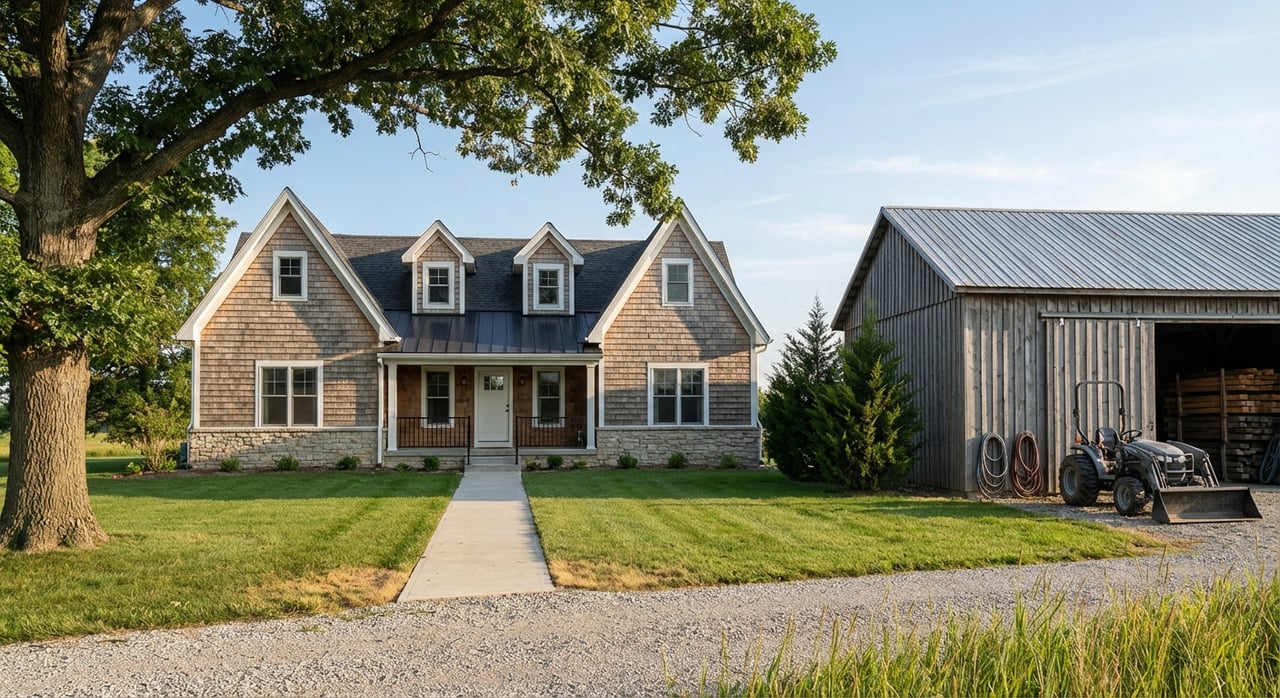
Craving room to breathe, a big sky, and a place to put your hands in the dirt? Acreage living in Brown County, Kansas can deliver that sense of space, along with the practical routines that come with caring for land. You may be picturing gardens, a small herd, or a quiet workshop away from town. This guide walks you through what daily life looks like, how utilities typically work, key checks before you buy, and smart ways to set yourself up for success. Let’s dive in.
Brown County at a glance
Brown County sits in northeast Kansas, with a small, rural population and a friendly pace. The 2020 Census recorded about 9,508 residents countywide, which means you can expect low population density and fewer traffic headaches. You can verify the latest snapshot from the U.S. Census for a sense of scale and trends in the area. See Brown County quick facts.
Hiawatha is the county seat and main service hub, while Horton serves the southern part of the county. For bigger shopping trips, specialized medical care, or airport access, many residents plan on driving to larger metros. Kansas City is roughly 90 to 95 miles, and Topeka is about 65 to 75 miles, depending on your exact starting point and route.
What you can buy on acreage
Price snapshot and property types
You’ll find a mix of in-town homes, small acreage tracts of 1 to 10 acres, and larger parcels that stretch into the dozens of acres. As a general reference, the county’s median listing price has hovered in the mid-hundreds of thousands in recent snapshots. Always confirm current pricing because inventory moves and numbers change quickly. You can browse a live overview on Realtor.com’s Brown County page.
Buyers typically fall into a few groups: hobby farmers, retirees seeking space, remote workers who can handle a longer drive for town errands, and producers expanding existing operations. As you look, decide whether you need a ready-to-go hobby setup with barns, fencing, and working well and septic, or if you prefer a rural house with open land you can improve over time.
Outbuildings and site features
Common improvements on acreage include pole barns or machine sheds, equipment garages, run-in shelters for livestock, grain or feed storage, and fenced areas for gardens or pasture. Many buyers prioritize parcels with usable outbuildings to save on start-up costs. If you plan to build, check county rules for setbacks and permits, and note whether any part of the property touches mapped floodplain. Brown County provides floodplain permit guidance on its site. Review the county’s floodplain permit page as you plan.
Utilities and connectivity
Water wells
Many rural homes rely on private wells. Unlike public water systems, private wells are not routinely monitored by the state. The Kansas Department of Health and Environment (KDHE) strongly recommends inspection and regular testing for coliform bacteria, nitrates, and any known local contaminants. Ask for well logs and recent lab results during your due diligence, and budget for treatment if needed. Learn more about KDHE’s private well testing guidance.
Septic systems
Most acreage homes use on-site wastewater systems. KDHE’s Bulletin 4-2 sets statewide technical standards, and many counties add local sanitary codes that require permits and inspections for new or replacement systems. Confirm permits, age, and condition, and verify that the existing system is appropriately sized for the home. Start with KDHE’s overview of the Local Environmental Protection Program to understand how local reviews work.
Power considerations
Electric service in rural areas is typically provided by a mix of investor-owned utilities and co-ops. Reliability can vary by location, and outages may take longer to resolve than in town. If you store frozen foods or run sensitive equipment, consider surge protection and a backup power plan. Always confirm the actual utility provider for a specific address during your property review.
Internet options
Broadband is highly address-specific. In-town addresses may have cable or faster options, while many rural parcels rely on DSL, fixed wireless, satellite, or cellular home internet. New low-earth-orbit satellite services can be a game changer for remote work, but you should verify availability for the exact parcel. You can start with a local provider overview for Hiawatha and then check service by address. See a broadband snapshot for Hiawatha, and test speeds at any property you tour.
Land, soils, and floodplain checks
Soil maps and drainage
Soil type and drainage impact almost everything, from orchard success to where you can site a barn or a septic field. The USDA’s Web Soil Survey lets you draw your parcel and review the underlying soils, slope, and drainage. It is a powerful, free planning tool. Explore your area on the NRCS Web Soil Survey.
Floodplain permits
If a property touches a mapped floodplain, certain projects may require permits or added engineering. Brown County publishes floodplain development permit information to guide owners and builders. Check the floodplain permits page before you finalize building plans, and review parcel maps with your agent.
Growing, grazing, and daily routines
Climate and planting window
Northeast Kansas has four seasons, with a spring severe-weather window and warm summers. In the Hiawatha area, the average last spring frost is around April 20 and the first fall frost is near October 16, giving you roughly a 178-day growing season. Plan gardens and orchards around those dates, and consider raised beds and frost protection for tender crops. Check the Old Farmer’s Almanac frost dates for Hiawatha as you plan.
Hobby herds and gardens
A small flock of poultry or a few head of cattle is manageable on several to a few dozen acres, depending on pasture quality and winter hay needs. Daily routines typically include morning and evening checks, water and feed as needed, and seasonal pasture rotation. For gardens and perennials, site beds away from low, wet areas, test your soil, and plan for irrigation during summer heat.
Local guidance can save you time and money. Brown County K-State Research and Extension offers practical help with soil testing, forage analysis, and small-acreage workshops. Tap into their resources at the Brown County K-State Extension page.
Starter equipment checklist
Think of these as common tools to match to your acreage and goals:
- Compact tractor, 20 to 50 HP, with a front loader
- Rotary cutter or brush hog for pasture and rough mowing
- Post-hole auger or driver, fencing tools, and fencing supplies
- Utility trailer plus an ATV or UTV for chores and checks
- Chainsaw, wheelbarrow, hand tools, fuel storage, and a dry shed or pole barn
Safety, services, and trade-offs
Emergency services in rural areas often rely on volunteer fire departments and the county sheriff, and response times can vary. Hiawatha Community Hospital provides critical-access care locally. Many southern Brown County residents travel to Hiawatha or nearby cities for major care. Plan for self-reliance, clear property access for responders, and regular equipment checks before storm season.
Severe weather is part of life in northeast Kansas. Keep gutters clear, maintain defensible space around buildings, and review shelter plans. A small generator can keep sump pumps, refrigerators, and well systems running during outages.
Income ideas and land use
Many hobby farms aim for simple cost offsets. Options might include hay sales, small-scale livestock sales, a seasonal garden stand or CSA, or leasing hunting rights. Kansas’s Walk-In Hunting Access program offers a model for seasonal access on private land, and it is a useful reference for land management ideas. Read about the Walk-In Hunting Access program.
How to evaluate an acreage property
Due diligence checklist
- Confirm water: request well logs and recent lab test results for coliform and nitrates per KDHE well testing guidance.
- Verify septic: ask for permits, location map, age, and capacity. Review local processes via KDHE’s Local Environmental Protection Program.
- Map soils: use the NRCS Web Soil Survey to check drainage, septic suitability, and crop potential.
- Check floodplain and permits: review Brown County’s floodplain permit information and ask about setbacks for outbuildings.
- Test internet: verify providers and speeds by address. Start with a broadband snapshot for Hiawatha and confirm coverage on site.
- Budget for equipment: note whether included outbuildings and attachments are usable and right-sized for your plan.
- Validate pricing: monitor live market data for Brown County on Realtor.com and compare against recent local sales with your agent.
- Tap local expertise: consult the Brown County K-State Extension for soil tests, forage advice, and seasonal chores.
Work with a local guide
Choosing the right acreage is equal parts dream and due diligence. You deserve a partner who understands rural systems, local permits, and how to balance daily chores with lifestyle goals. If you are comparing traditional listings and auction opportunities across northeast Kansas, we can help you weigh the options and move forward with confidence.
Ready to walk land in Brown County and build a plan that fits your life? Start a no-pressure conversation with Louise Regenstein today.
FAQs
What utilities are typical on Brown County acreages?
- Many properties use private wells and septic systems, with electric service from a utility or co-op and address-specific internet options such as DSL, fixed wireless, satellite, or cellular.
How do I verify well safety before buying a rural home?
- Ask for well logs and recent lab tests, then follow KDHE’s private well testing guidance for recommended sampling and ongoing maintenance.
What should I know about septic systems on acreage?
- Confirm permits, location, age, and capacity, and check local review steps through KDHE’s Local Environmental Protection Program.
How long is the growing season near Hiawatha, KS?
- The average last frost is around April 20 and the first fall frost is near October 16, giving roughly a 178-day window per the Old Farmer’s Almanac.
How can I check soils and drainage on a specific parcel?
- Use the NRCS Web Soil Survey to map soils, slope, and drainage, then ground-truth with on-site observations.
Are there special permits if part of the land is in a floodplain?
- Yes. Review Brown County’s floodplain permit information and consult the county before building or grading in mapped flood areas.
What are realistic small-acreage income ideas?
- Common options include hay sales, small livestock or egg sales, a garden stand or CSA, and leasing hunting rights. See Kansas’s Walk-In Hunting Access program for access models and land stewardship ideas.